Below, I've posted the books I'll be reading in the first three months of the new year. I think it would be wonderful of any of you dear readers would like to join me in reading these books. After the two week reading period (or thereabouts) for each book indicated below, I'll post a short blog on my thoughts about the content and you can post yours in the comments section if you so choose. (Note: none of these books is slated for publication in 2012; they've all already been published and most are either available in paperback or on the kindle and other ereaders.) So. Are you ready for this? Okay then.
01/01/12 through 01/14/12 Blood Work: A Tale of Medicine and Murder in the Scientific Revolution by Holly Tucker
01/15/12 through 01/28/12 Your Face Tomorrow: Fever and Spear by Javiar Marias
01/29/12 through 02/04/12 Germline by T.C. McCarthy
02/05/12 through 02/18/12 After the Apocalypse by Maureen F. McHugh
02/19/12 through 02/25/12 Spaceman Blues by Brian Francis Slattery
02/26/12 through 03/03/12 The Mezzanine by Nicholson Baker
03/04/12 through 03/17/12 Alliance Space (including the novels Merchanter's Luck and Forty Thousand in Gehenna) by C.J. Cherryh
03/18/12 through 03/31/12 Up Against It by M.J. Locke
Take the plunge with me, won't you? And happy holidays!
Showing posts with label reading. Show all posts
Showing posts with label reading. Show all posts
Saturday, December 24, 2011

Tuesday, August 30, 2011
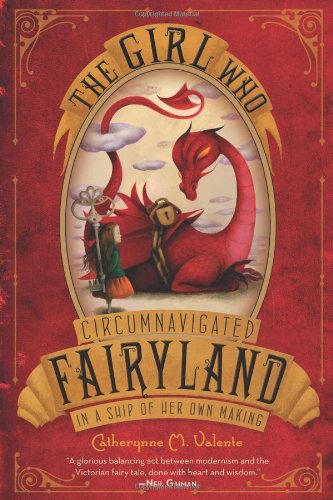
Reading: The Girl Who Circumnavigated Fairyland in a Ship of Her Own Making by Catherynne M. Valente
 I was reminded, to a certain degree, of the works of Angela Carter in Catherynne M. Valente's lovely The Girl Who Circumnavigated Fairyland in a Ship of Her Own Making. This might well be a YA kind of story but, as with most of Valente's work that I've read - and like Angela Carter - there are sufficient heapings of gloom and doom (uhh...not that YA can't have that or something; remember M.T. Anderson's Prince of Nothing duology or Sue Towsend's hilarious but ultimately heartbreaking The Secrety Diary of Adrian Mole, to name a couple?). So I guess what I'm saying, in a very roundabout way, is: The Girl Who Circumnavigated Fairyland in a Ship of Her Own Making rocks.
September, our heroine, is transported to Fairyland upon by the Green Wind - who has taken pity on her. Once in Fairyland and after having chosen the cruelest of three paths, Setpember sets out on a quest to return a spoon stolen by the Marquess - the current ruler of Fairyland - from the witches Hello and Goodbye, and their wairwulf husband Manythanks. The journey becomes much more than a spoon's quest, however, as September learns that something is terribly amiss in Fairyland and it seems the Marquess is to blame. Along her way September gains companions A Through L - a wyvern fathered from a library - and Saturday - a sea creature called a Marid who eats stone. The journey for the spoon - and then later for a sword - will take them across Fairyland, though it isn't like any Fairyland you've seen before: this Fairyland is dangerous and, afraid of angering the Marquess, many will do her bidding, making it hard to know who to trust. By the end, even September is not the innocent, young girl she was when the Green Wind whisked her off from her parents' house. Highly Recommended.
Here is an excerpt of The Girl Who Circumnavigated Fairyland in a Ship of Her Own Making:
In Omaha, signposts are bright green with white writing, or occasionally white with black writing. September understood those signs and all the things they pointed to. But the signpost before her now was made of pale wind-bleached wood and towered above her: a beautiful carved woman with flowers in her hair, a long goat's tail winding around her legs, and a solemn expression on her sea-worn face. The deep gold light of the Fairyland sun played on her carefully whittled hair. She had wide, flaring wings, like September's swimming trophy. The wooden woman had four arms, each outstretched in a different direction, pointing with authority. On the inside of her easterly arm, pointing backward in the direction September had come, someone had carved in deep, elegant letters:
TO LOSE YOUR WAY
On the northerly arm, pointing up to the tops of the cliffs, it said:
TO LOSE YOUR LIFE
On the southerly arm, pointing out to sea, it said:
TO LOSE YOUR MIND
And on the westerly arm, pointing up to a little headland and a dwindling of the golden beach, it said:
TO LOSE YOUR HEART
Monday, August 29, 2011
Reading: Mechanique: A Tale of the Circus Tresaulti by Genevieve Valentine
Mechanique: A Tale of the Circus Tresaulti, the debut novel by Genevieve Valentine, is the best book I've read so far this year. The language of the novel is poetic and hypnotic and moving. It's a short novel, but Valentine managaes to get across so much with so little - a gift if ever there was one, truly.
 It's about a traveling circus in either an alternate Earth or a post-apocalyptic Earth. The circus is run by the enigmatic Boss, a woman with an ambiguous past and strange magical powers. In this circus, many of the performers are kept alive by adding mechanical components to their bodies - from Panadrome, the one-man orchestra, to Elena the aerialist with brass bones. Even as the circus is hounded by "government men," there is a quiet war between several performers and a pair of gold wings Boss keeps.
You might be saying to yourself, isn't the whole circus thing kind of worn thin? Perhaps so, but Valentine injects it with grace (sidenote: now I'm imagining a needle full of grace in my arm) and heartbreak. Even though it is a somwhat nonlinearly structured novel, every scene works toward its inevitable conclusion with surprising wonder. Supremely-doo-remely Recommended.
Here is a an excerpt from Mechanique: A Tale of the Circus Tresaulti:
Little George was slated to be fixed, but Boss keeps him out of the workshop even after he asks, and so he keeps moving slowly through time until he's older than Ying, until he's nearly as old as Jonah, who has been twenty-five since the day he came to the circus and was gifted with his clockwork lungs.
Slowly, Little George begins to wake up to the world in a way he cannont name.
He does not know that Ying will never be older; he does not know why he takes such care not to anger the Grimaldi brothers. He is not aware, only awake.
He knows nothing for certain; he only sees that when the government man is gone, the circus gathers in two groups to see what Boss will do: who are alive, and those who have survived the bones.
Thursday, August 25, 2011
Reading: Miss Peregrine's Home for Peculiar Children by Ransom Riggs
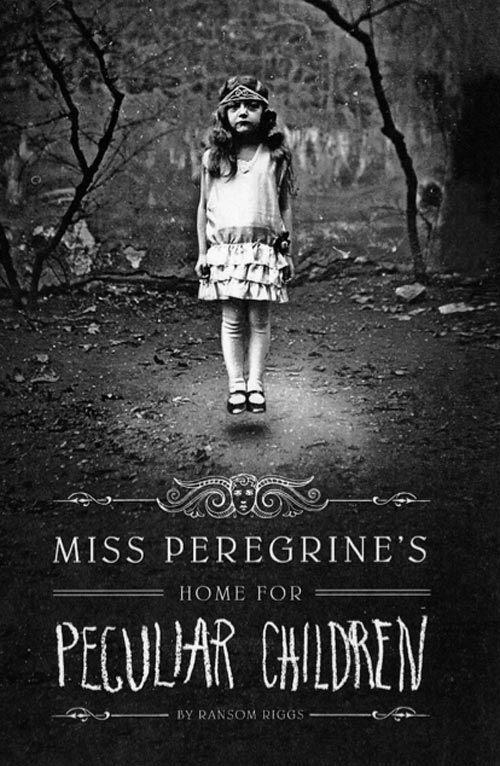 What initially piqued my interest in Miss Peregrine's Home for Peculiar Children by Ransom Riggs was the use of "found photographs" within the text. Most of the photographs are from the archives of Robert Jackson and, make no mistake, there are some truly peculiar, even haunting, photos here. However, I found the conceit wearisome after about 100 pages with each photo being introduced by a sudden "remembrance" from the narrator - surely, there are more ways to incorporate the photos than merely "I remember..."? The twists near the end of the story I also thought were predictable and not all that interesting, making it fairly easy to see how the story will continue - this book being the first in a series. That doesn't mean Riggs won't surprise (though I can't imagine the second book using found photos again as its hook), and I'm invested enough in the characters I'll give the next book a fair shot.
In this story, young Jacob's grandfather tells him stories of a strange past - fighting monsters and living in a boardinghouse on an island off the coast of the UK with other "peculiar" children, all of whom had some sort of strange power, whether it be invisibility or amazing strength or weightlessness - but Jacob's father convinces him that his grandfather's stories are just stories, despite the photographs to the contrary, and that his grandfather had been escaping Nazi Germany during WWII. But Jacob's life is turned upside down when his grandfather suddenly dies and clues point toward the truth of his mysterious past as a "peculiar" child. On the advice of his therapist, Jacob visits the island where the boardinghouse resides, and meets some very strange folk there.
Here is an excerpt from Miss Peregrine's Home for Peculiar Children:
I recognized them somehow, though I didn't know where from. They seemed like faces from a half-remembered dream. Where I had seen them before - and how did they know my grandfather's name?
Then it clicked. Their clothes, strange even for Wales. Their pale unsmiling faces. The pictures strewn before me, staring up at me just as the children stared down. Suddenly I understood.
I'd seen them in the photographs.
The girl who'd spoken stood up to get a better look at me. In her hands she held a flickering light, which wasn't a lantern or a candle but seemed to be a ball of raw flame, attended by nothing more than her bare skin. I'd seen her picture not five minutes earlier, and in it she looked much the same as she did now, even cradling the same strange light between her hands.
I'm Jacob, I wanted to say. I've been looking for you. But my jaw had come unhinged, and all I could was stare.
Wednesday, May 4, 2011
A List of My Favorite Books (So Far) in 2011
With awards season right around the corner - we've got Locus, Nebula, Hugo, Jackson, to name a few - I thought I would go ahead and list some of the books I've liked reading the most in 2011. They're weren't all published this year or even last year and I don't think any of them are nominees for any of the awards listed above except Nora Jemisin's first book, The Hundred Thousand Kingdoms. Regardless, these are books I'll probably read again and again.
Redemption in Indigo by Karen Lord (Small Beer Press)
The Fixed Stars: Thirty-Seven Emblems for the Perilous Season by Brian Conn (Fiction Collective)
The Hundred Thousand Kingdoms/The Broken Kingdoms by NK Jemisin (Orbit)
Babel 17/Empire Star by Samuel R. Delany (Vintage)
Light Boxes by Shane Jones (Penguin)
Leviathan Wakes by James S.A. Corey (Orbit)
Half World by Hiromi Goto (Viking)
Most of the aforementioned books I've reviewed on this here blog, but a few, like Shane Jones's Light Boxes, I haven't had time to yet; others, like Leviathan Wakes, will have a review within the next week or so. I'm currently reading Catherynne M. Valente's Deathless and really loving it.
Though I have quite a backlog of books to get through, I've recently picked up the following and I can't wait to read them:
Mechanique: A Tale of the Circus Tresaulti by Genevieve Valentine (Prime)
The Quantum Thief by Hannu Rajaniemi (Tor)
Embassytown by China Mieville (Del Rey)
Up Against It by MJ Locke (Tor)
A Dance With Dragons by George RR Martin (Bantam)
Do YOU have any favorites?
Redemption in Indigo by Karen Lord (Small Beer Press)
The Fixed Stars: Thirty-Seven Emblems for the Perilous Season by Brian Conn (Fiction Collective)
The Hundred Thousand Kingdoms/The Broken Kingdoms by NK Jemisin (Orbit)
Babel 17/Empire Star by Samuel R. Delany (Vintage)
Light Boxes by Shane Jones (Penguin)
Leviathan Wakes by James S.A. Corey (Orbit)
Half World by Hiromi Goto (Viking)
Most of the aforementioned books I've reviewed on this here blog, but a few, like Shane Jones's Light Boxes, I haven't had time to yet; others, like Leviathan Wakes, will have a review within the next week or so. I'm currently reading Catherynne M. Valente's Deathless and really loving it.
Though I have quite a backlog of books to get through, I've recently picked up the following and I can't wait to read them:
Mechanique: A Tale of the Circus Tresaulti by Genevieve Valentine (Prime)
The Quantum Thief by Hannu Rajaniemi (Tor)
Embassytown by China Mieville (Del Rey)
Up Against It by MJ Locke (Tor)
A Dance With Dragons by George RR Martin (Bantam)
Do YOU have any favorites?
Wednesday, November 3, 2010
Top 10 Books I Read in 2010
 How ya doin', kiddos? In your "I-just-voted-now-what" revelry, I've gone ahead and made a list of the best books I've read in 2010. Now, that isn't to say that all of these books were published in 2010, though some of the were, but these books are the ones that resonated with me the most. A few I've read before because I reread them every year. They're that good. As with my Top 10 Records, there's no numbering system. I absolutely refuse to put a number on things I like!
I wanted to give a fairly equal share of the love between non-genre and genre, fiction and nonfiction, because I read all of these; however this year I was accepted to Clarion Science Fiction & Fantasy Writers' Workshop in San Diego and I decided it was worth it to read a lot of genre work in preparation for the six-week workshop (and yes, two of the instructors are mentioned below, not because I'm trying to kiss their asses, but because their books are seriously two of the best books I've read this year; and okay, a little ass-kissing can't hurt). The genre trend, even after the workshop, has kept up and, unfortunately, this year I've read very few nonfiction works. I intend to change that at the beginning of the new year.
Okay. Away we go.
Top 10 Books I Read in 2010 (not a David Letterman sketch)
The Orange Eats Creeps by Grace Krilanovich (Two Dollar Radio, 2010)
Hobo teen vampire junkie wandering the Pacific Northwest, high on meth and robitussin, and haunted by the disappearance of her sister while being chased by a serial killer. And that's what the back of the book says. What is this book really about? To tell you that, I'd have to read it again and maybe a third time after that. And I will read it again. The first time through, however, is a stream-of-consciousness experience and the language is so vibrant, Krilanovich's sentences come to life.
The Hot Kid by Elmore Leonard (William Morrow, Phoenix, HarperTorch, 2005)
Breezy crime noir doesn't get much better than Elmore Leonard. This one takes place in Depression-era Oklahoma and it concerns oil and badass US Marshal, Carl Webster. This is the kind of book you read in two days, but it's a fun and gloriously thrilling two days.
City of Saints & Madmen by Jeff Vandermeer (Tor, 2004)
Jeff happened to be one of my instructors at Clarion and I thought it was a good idea to get acquainted with my instructors through their work. I was not let down here. The book is four novella-length stories and then 400 pages of appendices, based on the fictional city of Ambergris. There are more details about this city in this book than in a lot of history books about Rome - it's a good thing: Ambergris is one of the most fascinating places I've ever visited. You've got the Festival of the King Squid, a fictional but realistic religion called Truffidianism, strange mushroom people who dwell beneath the city called gray caps, and so much more.
Nova by Samuel R. Delany (Doubleday, 1968)
Chip, as he's known in the field, was also an instructor of mine at Clarion. I'd grown up with his divisive behemoth, Dhalgren, in my house as a kid. I still see that deep orange sun on the cover, that first half-sentence, "to wound the autumnal city." Say what you will about it, but I loved it. It was, according to my father and I trust him, a testament to the fucked-upness of the sixties. Nova is nothing like that. Its plot is pretty typical space opera, but with Delany's singular disillusionment of our dependence on resources and depth of character and detail.
The Windup Girl by Paolo Bacigalupi (Night Shade Books, 2009)
Bangkok, the near-future, a calorie-fueled soceity, genetic manipulation, dirigibles. This is pretty much everything I could want in reading a novel. We're talking violence, heartbreak, sex, love, cruelty, ignorance, empowerment. Bacigalupi is the writer to watch, in my opinion. Not only is this book full of ideas and warnings for our own future, but it's extremely well-written too. Bacigalupi is creating a new kind of cyberpunk and I'm in, definitely in.
Nobody Move by Denis Johnson (Farrar, Straus, & Giroux, 2009)
This is Denis Johnson writing an Elmore Leonard novel! The only thing that could be better than this is if Quention Tarantino made a scifi movie. Nobody Move was an easy, swift read and excellent crime noir, definitely Johnson at his lightest. After a heavy-hitter about the Vietnam War and intelligence or lack thereof in Tree of Smoke, I'd want to do something light too. The rundown: dude gets caught up in some shit he shouldn't have, things get out of control, everybody wants a cut of the dough, and there's a pretty girl. Awesome.
Middlesex by Jeffrey Eugenides (Farrar, Straus, & Giroux, 2002)
This is a book I read once every couple of years. I love the hermaphrodite narrator, Cal/Calliope. How s/he is able to back in time and be her grandmother and her father, witnessing the exodus from Asian Minor to Prohibition Era in the US, all of it a love story about Detroit, the ruined city. It's heartbreaking.
Cathedral by Raymond Carver (Harvill Press, 1983)
This isn't a novel. It's a book of short stories. Carver writes about the regular guy purely, without any sentimentality and this is his finest collection. I read this every year. No other story like the first story, "Feathers," with its crazy peacock has influenced me more as a writer. The final story, "Cathedral," is also worth the collection alone.
Who Fears Death by Nnedi Okorafor (DAW Books, 2010)
I reviewed a few weeks ago. Okorafor's future world is a bleak desert with broken-down computers and strange sorceries. But it's about so much more: genocide, feminism, technology, etc. And written with such lovely style and grace.
How to Live Safely in a Science Fictional Universe by Charles Yu (Pantheon, 2010)
I reviewed this book, too, way way way back in September. If I had to choose (and I'm not, I tells ya, I'm not!) the number one book I read in 2010, it would be Yu's masterful, How to Live... Normally, I hate time travel stories because they're usually done very poorly with gaping holes and fundamental flaws. If Yu's novel has any of those, I've yet to see them. He has written the perfect time travel story; and, not only that, he's written a moving piece about a son searching for his father. Kudos, sir, kudos. You've won me over twice.
So there they are in all their glory. I have about 25 books on my bookshelf that I still need to read this year. I'm currently in the middle of Ian McDonald's Brasyl and it's swimmingly good (all about the multiverse and quantum computers and the country of Brazil, wild!). Some more books on my list:
The Thousand Autumns of Jacob de Zoet by David Mitchell
The Hundred Thousand Kingdoms by NK Jeminison
Oblivion, More or Less by Alan De Niro
The City & the City by China Mieville
Jonathan Strange & Mr. Norrell by Susanna Clarke
Anything else I should put on this list? What are you reading?
Subscribe to:
Posts (Atom)