Sunday, May 20, 2012

What's Up & Coming (Also, I'm Back?)

So, I went away from this blog for awhile. I'm back now. I'm still reviewing and podcasting movies and books over at www.weeklytake.com with my friends and contributors John Dwyer and Charlie Truong, so please check that out. You can also follows @theweeklytake on Twitter.

Okay, onto other news:

1) My review of Briarpatch by Tim Pratt is out in issue #7 of Bull Spec.

2) Shimmer will soon be publishing my story, "What Fireworks." More details when the issue becomes available (which should be very, very soon!) But in the meantime, Issue 14 has one of my favorite writers and friends and Clarion classmates - Karin Tidbeck - so I highly recommend you grab a copy of that toute suite!

3) And speaking of Ms. Tidbeck - I have an interview with her coming in late May at Strange Horizons. We talk about sunlight hours in Sweden, LARPing, and gnomes. I'll be sure to remind you when this is available as well.

In June, I'm heading to Minnesota for a week to finish this little novel I've been working on, and to swim in my friend's pool and drink his whiskey. Before I get there though I'd like to get drafts finished on two novellas, a short story, and a novelette. It seems possible, right? Right. So enough blogging then, back to story writing.

But fear not. I have returned.

Monday, February 20, 2012

The Weekly Take!

I apologize for the recent silence on this blog, but I have an excuse. No, the dog didn't eat my blogposts; no, I didn't fall into the house in House of Leaves (though I kinda want to); no, the internet was not taken over by Moon People from the future and their immortal writer/savior J. Ari Hilliard (if you don't know what I'm talking about, you should probably watch Lunopolis, and then let me take you out to dinner as consolation). The reason is this, simply:

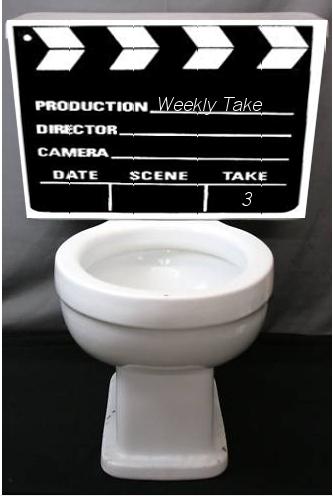
I have started, along with cohorts John Dwyer and Charlie Truong, a movie/book/video game review site. It's called The Weekly Take*, and you can follow us on twitter @theweeklytake. Every week the three of us do expectations (a quick write-up of what each of us hopes to get out of the film before viewing it), written reviews (obviously), and a podcast or "Premium Take" of an agreed-upon movie. We've already reviewed The Girl with the Dragon Tattoo; Tinker, Tailor, Soldier, Spy; Red Tails; The Grey; Chronicle; and The Descendants. Follow the links to listen to the podcasts. We also write expectations and reviews for films not slated for Premium Takes.

The Weekly Take's main focus is cinema and cinema-related content, but that isn't all we do. We also plan on reviewing books (look for Osama by Lavie Tidhar and Wonderstruck by Brian Selznick in the coming days), video games, and music.

Having said that, most of the content of this blog, The Spiral, has been book reviews and thoughts on writing and music; however, content of that nature will now be moving to The Weekly Take - and I certainly hope you "take," ahem, the leap with me to the new site. Therefore, The Spiral will remain active for only a little while longer. I do plan on maintaining a personal blog and am in the process of setting it up, the details of which are foggy as yet, but when it is ready, expect a final blogpost here with a link to the personal blog.

In the meantime, I invite you to follow (and, if you so wish, subscribe to) The Weekly Take, and hope you enjoy reading and listening to our reviews as much as we've enjoyed writing and recording them. See you out there!


*Yes, our logo is a toilet with a movie clapper. So what. We like potty jokes.

Friday, January 20, 2012

The Thread: Your Face Tomorrow: Fever & Spear by Javiar Marais

This will be the thread I continue to post on while reading Your Face Tomorrow: Fever and Spear by Javiar Marias. If any reader feels so inclined, you may of course post your thoughts about the book in the comments section below.


I'm not sure how I feel about Your Face Tomorrow: Fever & Spear, the first book in Javiar Marias' trilogy about Jaime Deza, an agent in the British Intelligence Service with the uncanny gift of seeing "people...clearly and without qualms, with neither good intentions nor bad." On the one hand, this is a mostly philosophical text, heavy with profound insights into "seeing and not seeing," various kinds of relationships, literary and historical fogginess...On the other hand, the prose is, at times, awkwardly worded and punctuated - something that Jose Saramago used to great effect but which, here, feels contrived - and unnecessarily repetitive. There is no plot per se that I've been able to discern - I have 100 pages left of the novel - but that, for me anyway, is almost never a bad thing; some of my favorite works are "mood" pieces or, at least, don't have a clear beginning, middle, and end (see: Michal Ajvaz's The Golden Age, Grace Krilanovich's The Orange Eats Creeps, Eric Basso's The Beak Doctor or, even, Cormac McCarthy's Suttree). What Fever & Spear lacks, however, is an interesting narrator. That's not entirely true. Jaime is interesting or, rather, his thoughts on other people aren't interesting, but seems as if Jaime (or Jacques or Jacobo or Jack or Yago, as he often goes by) doesn't really know himself. Marias is himself aware of this, even writing about it: "He doesn't think much about himself, although he believes that he does (albeit without great conviction)." Obviously, it's an author trick, but I'm still not sure of it's purpose.

Thursday, January 19, 2012

Update: Reading Schedule

There is a slight change of plans in the reading schedule I detailed in late December. My friend Rachel has lent her copy of The Name of the Rose by Umberto Eco (replete with her notes scrawled in the margins!) and I have promised to read the book after I've finished Your Face Tomorrow: Fever & Spear by Javiar Marias. Thus, Germline has been pushed back two weeks and likewise all other books.

The new schedule, should you want to join, looks something like this:

01/29/12 through 02/11/12 The Name of the Rose by Umberto Eco

02/12/12 through 02/18/12 Germline by T.C. McCarthy

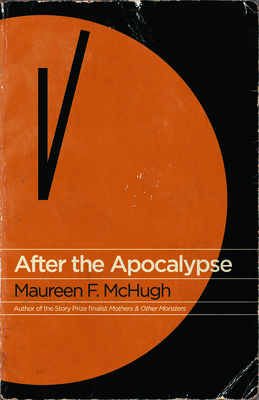
02/19/12 through 03/03/12 After the Apocalypse by Maureen F. McHugh

03/04/12 through 03/10/12 Spaceman Blues by Brian J. Slattery

03/11/12 through 03/24/12 God's War by Kameron Hurley (replacing The Mezzanine by Nicholson Baker)

03/25/12 through 03/31/12 The Alchemists of Kush by Minister Faust (replacing Alliance Space by CJ Cherryh)

We'll read the Cherryh, Baker, and Locke (Up Against It) in April or May, depending.

Friday, January 6, 2012

The Thread: Blood Work by Holly Tucker

This will be the thread I continue to post on while reading Blood Work: A Tale of Medicine and Murder in the Scientific Revolution by Holly Tucker. If any reader feels so inclined, you may of course post your thoughts about the book in the comments section below.

I'm about 135 pages in and absolutely loving this. It's nonfiction, of course, about the first blood transfusions in the 17th century. What starts as dog-to-dog transfusions (usually from a larger canine to a smaller) quickly progresses - as both English and French transfusionists compete - into transfusing blood from one animal species to another (horse-to-goat, for instance) and, eventually, the first ever animal-to-human blood transfusions. At the center of these experiments is Jean-Baptiste Denis, a Frenchman rising to popularity who, after a botched transfusion kills a man, is accused of murder.

But Blood Work is more than blood. It is also an account of how we got to those first transfusions, the steps and missteps, and how blood transfusions were banned for two hundred years thereafter. The chapter on the Great Plague of London in 1665-6 and of the London Fire were particularly horrifying and captivating.

In part, Blood Work is fascinating because Tucker's prose doesn't read like a stuffy historical narrative; instead, I am reminded of magical realists like Gabriel Garcia Marquez. She doesn't shy away from writing grotesquely vivid descriptions of the transfusions and, accompanied by the illustrations of the experiment tables and tools used, Blood Work may not be for the faint of heart. There is much cruelty in scientific discovery.

But so far it is a fascinating exploration of a dark and somewhat obscure moment in the history of science, and one I hope you'll continue to read with me.

UPDATE 01/14/2012

Blood Work was mesmerizing; Tucker made the 17th century come alive through her extensive research and her sparse, but elegant prose. Indeed, she was even able to correlate those early transfusions with the ongoing debates concerning hESC today. Imagine if, as Tucker posits, transfusionists had been allowed to continue their work even after the Denis debacle: how many more people might we have saved throughout history and, given the possibility of even greater benefits through hESC research, how many more could we save in the future?

Saturday, December 24, 2011

Reading: Won't You Join Me?

Below, I've posted the books I'll be reading in the first three months of the new year. I think it would be wonderful of any of you dear readers would like to join me in reading these books. After the two week reading period (or thereabouts) for each book indicated below, I'll post a short blog on my thoughts about the content and you can post yours in the comments section if you so choose. (Note: none of these books is slated for publication in 2012; they've all already been published and most are either available in paperback or on the kindle and other ereaders.) So. Are you ready for this? Okay then.


01/01/12 through 01/14/12 Blood Work: A Tale of Medicine and Murder in the Scientific Revolution by Holly Tucker

01/15/12 through 01/28/12 Your Face Tomorrow: Fever and Spear by Javiar Marias

01/29/12 through 02/04/12 Germline by T.C. McCarthy

02/05/12 through 02/18/12 After the Apocalypse by Maureen F. McHugh

02/19/12 through 02/25/12 Spaceman Blues by Brian Francis Slattery

02/26/12 through 03/03/12 The Mezzanine by Nicholson Baker

03/04/12 through 03/17/12 Alliance Space (including the novels Merchanter's Luck and Forty Thousand in Gehenna) by C.J. Cherryh

03/18/12 through 03/31/12 Up Against It by M.J. Locke

Take the plunge with me, won't you? And happy holidays!

Monday, December 5, 2011

Favorite Books of 2011: My Year in SF

I've said this before, but I'll say it again: Clarion taught me a lot about writing stories, but it also taught me a lot about reading stories - and just how little in the field of SF/F/H I'd actually read. You see, as a young reader I was a huge fan of Star Trek books and anything from Timothy Zahn, then in high school I turned to The Wheel of Time and A Song of Ice and Fire; during college, I read a lot of Tim O'Brien, Kurt Vonnegut, Cormac McCarthy, Denis Johnson, and Elmore Leonard. All of these books influenced my writing, of course, and I don't regret reading any of them (okay, maybe I regret those Star Trek books) - in fact, I reread The Things They Carried and Jesus' Son pretty much every year. However, as far as the genre I'd loved as a teenager - science fiction and fantasy - I wasn't as well-versed in as I thought I was or should have been prior to Clarion. I was familiar with and enjoyed Arthur C. Clarke, Asimov, and Douglas Adams but unfamiliar with a lot of current SF, as well as those harder-to-find classics. All I knew though was that I wanted to write science fiction and fantasy because I loved the possibilities these authors (as well as GRRM and Niven, and now a great many others) presented in their stories.

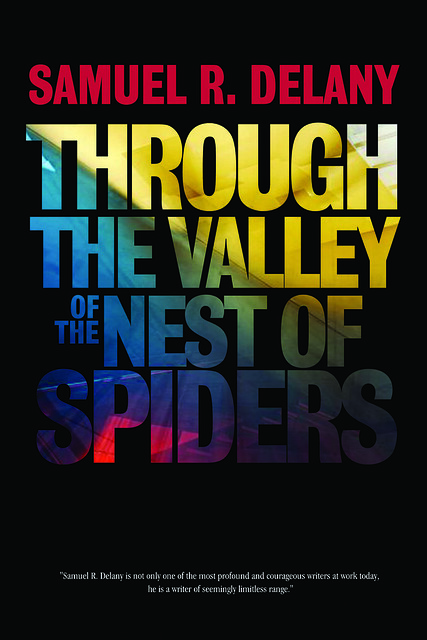
During Clarion, my ignorance and naivete of the genre hit me like a punch to the gut. I resolved to read as much as I could - classics and new - in the field. In fact, Chip Delany - one of the instructors at my Clarion - said, and I'm paraphrasing here I think, "to read one book of classic SF and one book of new SF every month." I took that advice to heart. It's impossible, of course, to read everything in a year (even for someone unemployed for most of it) and, though I'm by no means finished nor could I ever be, I feel as though I've made the tiniest of notches in the genre highway - see that little etching there, right there, put your face closer to the pavement, there, that's me. At least, it's a start. I understand the history of the genre better than I did year ago, which is important from an historical perspective for a writer; though perhaps most excitingly, I've found some truly amazing authors - writers I will follow for a good long time: Genevieve Valentine, Samuel R. Delany, Catherynne M. Valente, Maureen F. McHugh, J.M. McDermott, Jeff Vandermeer, China Mieville, Nnedi Okorafor...the list goes on.

So. To the point then. Though I did read many books published this year, I also read a great many published last year, and the year before, and the year before, and twenty years ago, and fifty years ago. Unsurprisingly then, this "Best Of 2011" list is a sort-of comprehensive look back at My Year in SF.

Best Books 2011
Though I'd be hard-pressed to pick a favorite book published in 2011, I have chosen three that I think are just wholly inventive and beautifully written.

Mechanique: A Tale of the Circus Tresaulti by Genevieve Valentine
The tale revolves around the performers of a circus vying for a pair of gold wings and steering clear of government men in a steampunkish, post-apocalyptic world. The nonlinear narrative is one of the story's strengths, glimpsing the future and the past, letting the reader work out the structure for him/herself. It's just fantastic, and you should read it.

Embassytown by Chine Mieville
Can we call this novel "linguistpunk?" Mieville has created a wonderfully original alien species unable, through their perception of language, to lie. This is Mieville's first true "science fiction" novel, though he's always balanced a line between it, fantasy, weird, horror, literary; and he proves again with Embassytown that he can do anything. It is dark, monstrous, and beautiful.

Zoo City by Lauren Beukes
A little noir, a little sci-fi, a little thriller, a lot of awesome. Beukes' prose startles and pops and snaps: Zoo City is alive from the first page through the end. Zinzi December has the ability to find lost things. A celebrity singer goes missing and Zinzi is tasked to find her - though she hates missing people cases. Oh, did I mention she has a sloth on her shoulder?


Best Anthology 2011
There were two anthologies published this year that just blew me away. That they're edited by the same two people is also pretty amazing. That these same two people were our last Clarion instructors and that they've also published several Clarion classmates in one of these anthologies, as well as, various other projects they've worked on this year is *headsplosion*

Okay, there are some other really cool anthologies published this year - Solaris Rising edited by Ian Whates, Marion Zimmer Bradley's Sword & Sorceress 26 edited by Elisabeth Waters (including a story by Clarion classmate Jennifer Hsyu), The Best of Dark Fantasy and Horror 2011 edited by Paula Guran...But the following two anthologies were unsurpassed in originality of concept and breadth of writers and stories:

The Thackery T. Lambshead Cabinet of Curiosities edited by Ann & Jeff Vandermeer
This anthology is a cross-pollinating, genre-hopping, meta-wielding monster. It tells of objects and other sundry things found in the home of Dr. Lambshead after his death. Many of these items were scarred by a fire. The anthology is sort of a fictional historical narrative encompassing the life and madness and collection of one of recent fiction's most eccentric figures, even using visuals (such as pictures, graphs, etc.) to illustrate this point. It's fantastic. Each reading brings forth more nuances, deeper layers.

The Weird: A Compendium of Strange and Dark Stories edited by Ann & Jeff Vandermeer
Comprising the last 100 years of weird fiction, this anthology is a must-have for readers of any genre. Just take a look at the Table of Contents and you get the idea: a lot of writers you might not think of as "weird" - Michael Chabon and Jamaica Kincaid, for instance - make forays into the genre now and again. Perhaps what's most exciting about this anthology - beyond the stories, of course! - is the inclusion of international writers of weird - a thing which, head-scratchingly so, few anthologies published in the States (weird or no) seem to be doing; as well as highlighting underrated authors who haven't gotten the mainstream attention their writing deserves (read: Eric Basso's "The Beak Doctor").


Best Translation
The Golden Age by Michal Ajvaz
Published in the original Czech in 2000 and translated in 2010, I heard about this book from Omnivoracious and, from Vandermeer's glowing review, knew I had to read it. I was not disappointed. The Golden Age is beautifully written, full of wondrous, vivid descriptions (the jellied statue, the Island's Book). The novel is mostly plotless; instead the narrative is driven forward by recollections of various incidents and encounters with the Book. This may be one of my favorite books ever. I cannot recommend it enough. Here is another story from Ajvaz, just as perplexing, just as beautiful, and translated by himself.


A Few Classics
I read a lot of what is considered "classic SF" over the past year or so. I think most people will be familiar with The Stars My Destination by Alfred Bester, Babel-17/Empire Star by Samuel R. Delany, Deathbird Stories by Harlan Ellison, and so on. Though, if you aren't, I highly recommend all of these; each of them are good jumping off points into the genre. Here are a few, however, that I personally had never heard of until Clarion and seem to be harder to find in bookstores but are most definitely worth the read.

We Who Are About To... by Joanna Russ
This brief novel left me dizzy for days. A ship carrying a small number of people crashes on a remote planet. There is no hope of rescue. Some of the survivors work toward building a civilization-of-sorts, reveling in what Samuel R. Delany calls, in his introduction "a generous universe"; the narrator, however, chooses a different path, and the outcome is harrowing and thought-provoking.

The Fifth Head of Cerberus by Gene Wolfe
This novel is really a set of three interlinked novellas set on the sister worlds Saint Anne and Saint Croix. In the first novella, titled "The Fifth Head of Cerberus," the narrator discovers his dark past; in the second, "'A Story', by John V. Marsch," an anthropologist happens upon shapeshifters native to the island; and in the third novella, "V.R.T.," a bureaucrat reads the diary of mad scientist. Like all things Wolfesian, these stories are densely layered, heady stuff.


A Smattering of Good Books from the Past and Up to the Near-Present
The title of this section says it all: these are some of my favorite books that I read this year. They may not be considered "classics" yet but who can say.

Yellow Blue Tibia by Adam Roberts
Russian science fiction writers are tasked with creating a believable alien invasion story. Then their story starts coming true. It's rare a book makes me laugh out loud, but Roberts succeeded in doing so three or four times in this co(s)mic journey with the fiction's finest ironist.

The Fixed Stars: Thirty-seven Emblems for the Perilous Season by Brian Conn
Post late-capitalists in a very surreal post-world. There is a bristle boar woman and a bathhouse. The narrative folds back on and over and in on itself. Fixed Stars is more like a long poem or a future folktale - I don't know. It's powerful and dark and fluid.

The Orange Eats Creeps by Grace Krilanovich
Teenage vampire hobo junkies roam the Pacific Northwest. One girl searches for her sister and is chased by a serial killer. The words within Creeps will leap out and eviscerate you with their imagery. One of my favorite novels from last year.

Who Fears Death? by Nnedi Okorafor
Another of my favorite novels from last year. Set in a post-apocalyptic Africa (if you haven't noticed yet, I like the post-apocalypse, hurm hum), Death deals with a great many problems - genocide, female circumcision - in serious, intelligent ways.

Redemption in Indigo by Karen Lord
Half Senegalese folktale with Caribbean influences, Lord's debut is a fun (and sometimes funny) and serious (and sometimes heartbreaking) story of Paama who, after leaving her gluttonous husband, receives the Chaos Stick - an item the gods want back.

Half the Day is Night by Maureen F. McHugh
Slow burn kind of novel. McHugh's second novel, originally published in 1994, is a loose sequel to her splendid China Mountain Zhang, set in the underwater city of Marincite. Banks and corporate greed play a large part in this noir-ish novel.

The Troika by Stepan Chapman
A jeep, a brontosaurus, and an elderly Spanish woman make their way across a vast desert world with three purple suns, hounded by unpredictable storms and the truth of their pasts. They switch bodies sometimes. A mad angel watches over them - sort of. Chapman's prose sparkles and eviscerates. Read this book...if you dare.

The Thousand Autumns of Jacob de Zoet by David Mitchell
I just can't say enough good things about David Mitchell. Everything he's written is worth reading. Thousand Autumns is set in Nakasaki Harbor, Japan, at the turn of the 19th century. Jacob de Zoet has come to make his fortune and win the hand of his love back in Holland. It is a riveting story with just the slightest hint of supernatural forces.


Just A Great Wintertime Read
Jonathan Strange & Mr. Norrell by Susanna Clark
I read this book last December, so I'll always associate it with that cold, wintry month. It is a magical book about, erm, magic during the Napoleonic Wars. JS&MN is a tome-sized book, clocking in at something like 820 pages, so be prepared for a long haul, but it's worth every moment. I promise.